Ephesus
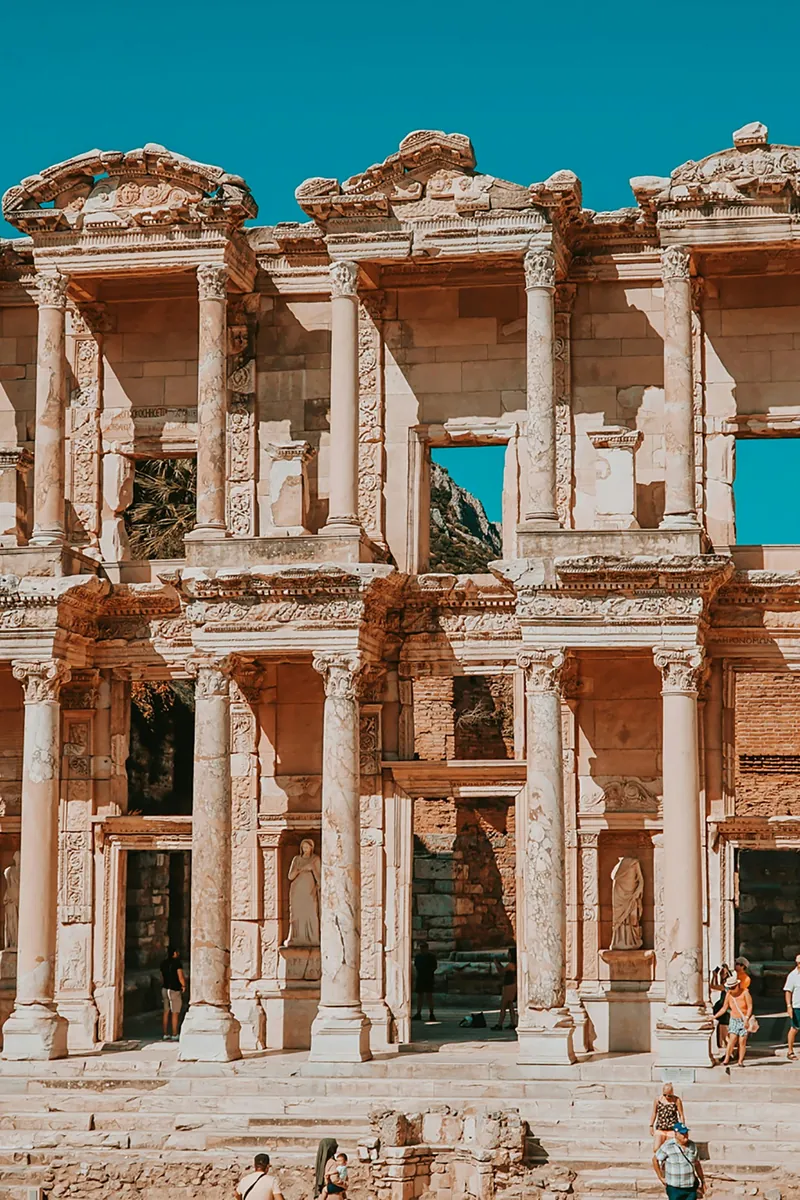
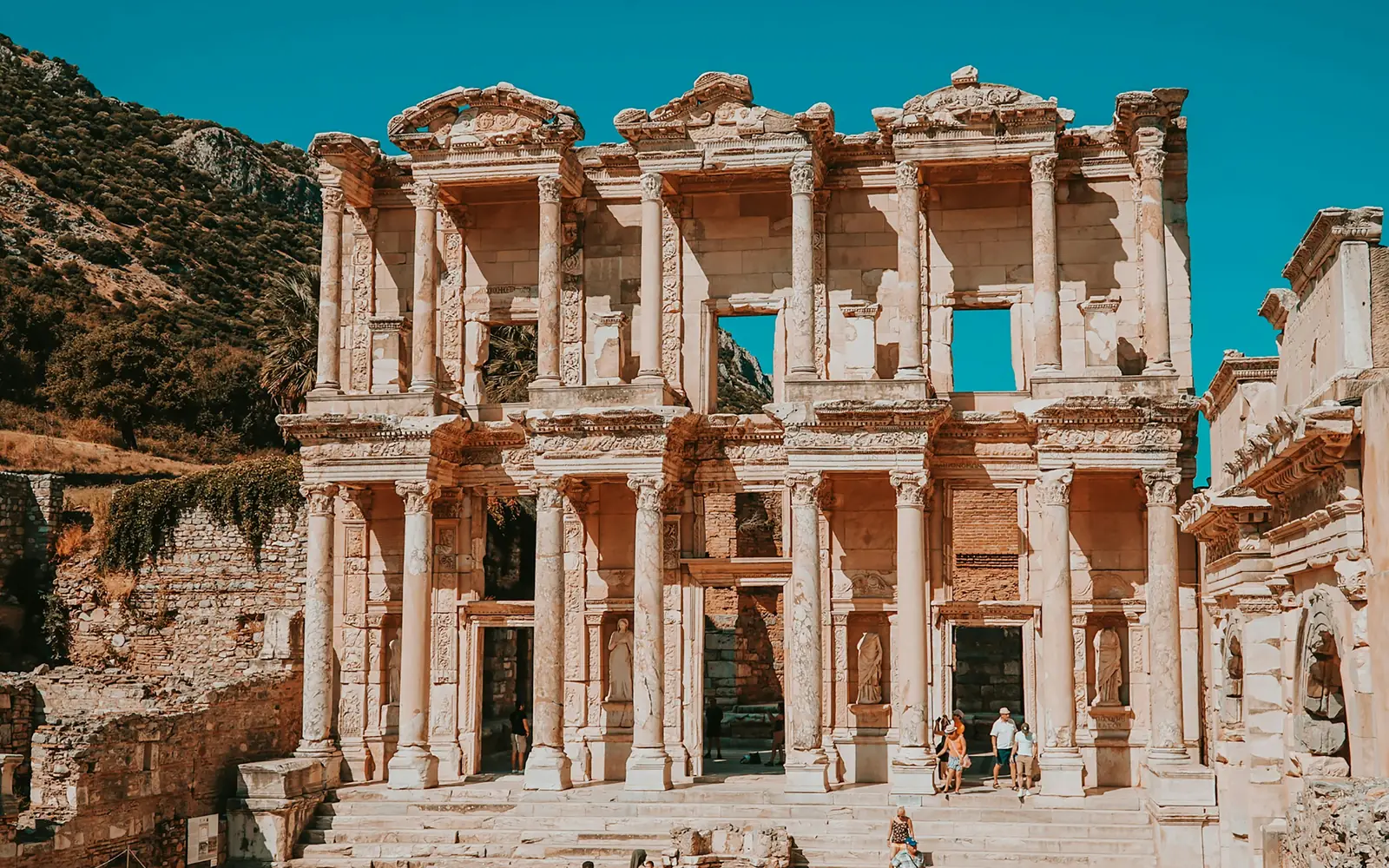
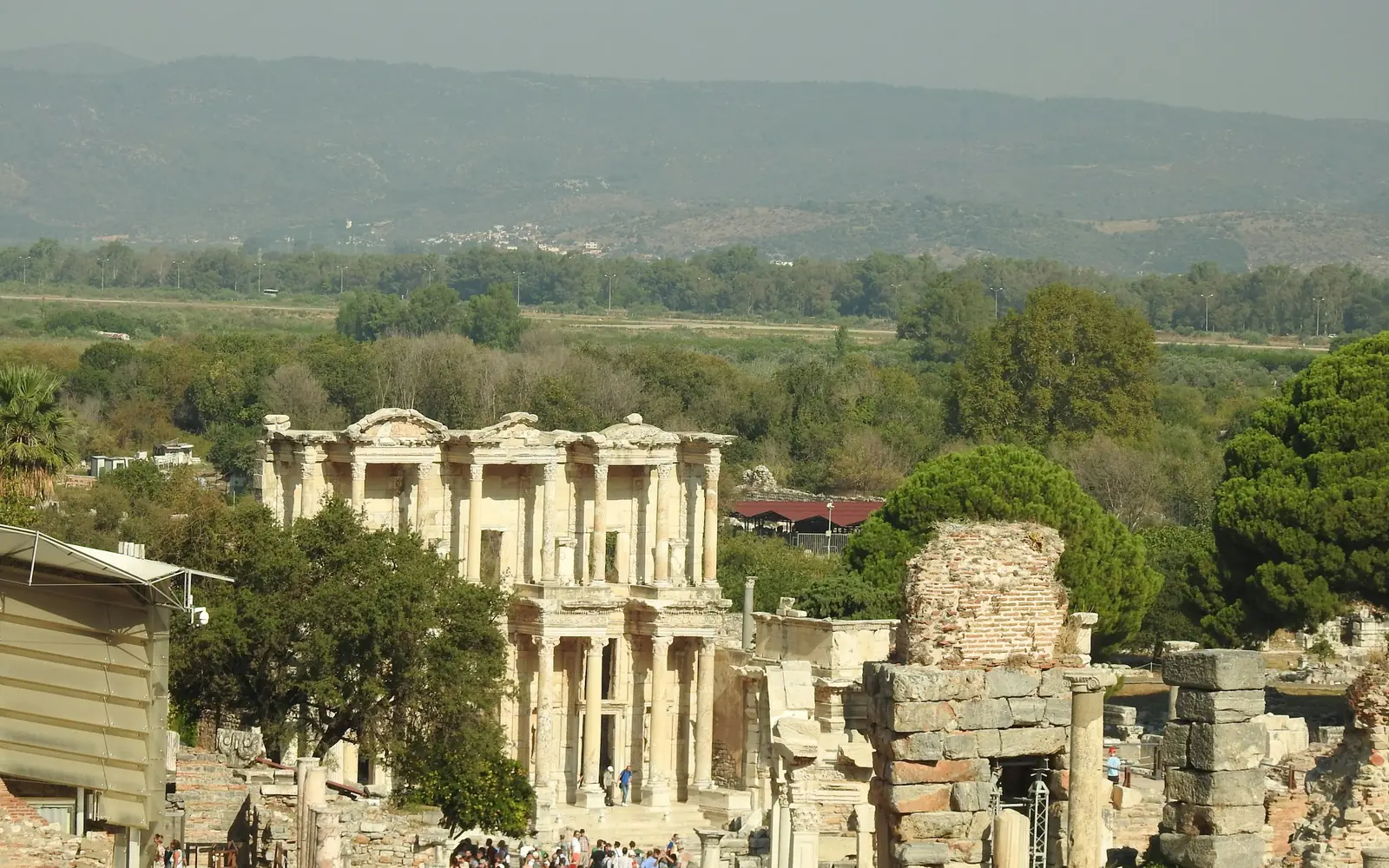
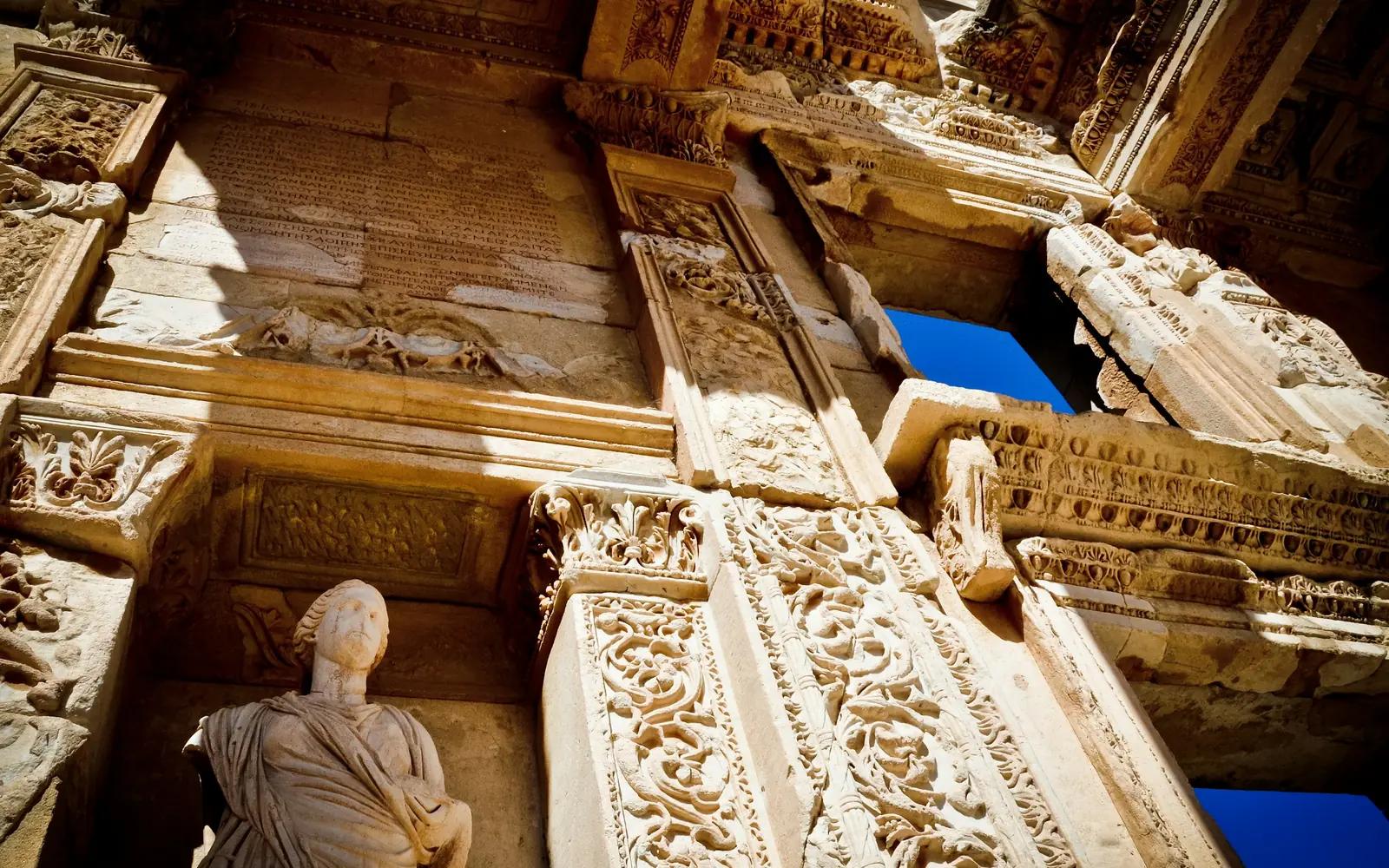
The two-storey marble facade of the Library of Celsus at Ephesus, its columns and statue niches glowing at golden hour, with the colonnaded ruins of the ancient city beyond. Selçuk, İzmir, Türkiye.

Selçuk · İzmir · the Aegean coast of Türkiye

Walk downhill through a Roman city that never went away

Marble streets, a two-storey library built as a tomb, and a theatre that once held twenty-five thousand people — all of it still standing in the open air above the old harbour.

Theatre seating

Two tickets, one walk

The site ticket is the main row: it opens the whole city and the Ephesus Experience Museum on any day you choose. The Terrace Houses are a box seat bolted onto it — worth it, but only usable with a site ticket.

Main ticket · open date

Adult ticket

Full archaeological site plus the Ephesus Experience Museum — open admission

€59per person

  • Skip-the-line site entry — open date, no fixed time slot
  • The Library of Celsus, the Great Theatre, Curetes Street and the Temple of Hadrian
  • The bundled Ephesus Experience Museum, the city's immersive multimedia show
  • 5-minute audio history sent before your visit
Reserve adult ticket
Add-on · needs the site ticket

Terrace Houses add-on

Entry to the separately gated Terrace Houses — requires a site ticket

€25per person

  • Entry to the covered Terrace Houses — the patrician homes with their mosaics and frescoes
  • Sheltered walkways above the original Roman floors, away from the open-site heat
  • Open date, no fixed time slot — use it on the same visit as your site ticket
  • Requires a valid Ephesus site ticket — this is an add-on, not standalone admission
Add the Terrace Houses
  • Open-date tickets: no time slot and no calendar. Arrive any time during opening hours on the day you choose.
  • The Terrace Houses sit behind their own gate inside the site. Add them to the same booking and use both on one visit.
  • Your e-ticket arrives by email as a QR code, and we re-send it the day before you go.

Most recent verified visit rated five stars — a party of four from Italy, August 2026.

UNESCO
World Heritage Site, inscribed 2015
25,000
Seats in the Great Theatre, one of antiquity's largest
1st–2nd C.
Marble heart of a great Roman provincial capital
Library of Celsus
The most photographed facade in the ancient Aegean

Sun and shade

When the marble is busiest

Cruise mornings and summer middays (roughly 10:00–14:00) bring big tour groups down Curetes Street and long ticket-office queues; skip-the-line and an open date let you arrive early or late and walk straight in.

  1. Early morning
  2. 10:00–14:00
  3. Late afternoon
  4. Last hour

There is very little shade on the main street. An open-date ticket lets you choose the cool end of the day rather than the crowded middle.

Along Curetes Street

What every site ticket carries

Skip-the-line site entryWalk past the ticket-office queue straight onto the marble streets
Open-date — no fixed time slotUse your ticket any day during opening hours, arrive when it suits you
Site + the Ephesus Experience MuseumThe whole archaeological city plus the bundled immersive museum, one ticket

The inscription

A provincial capital in three lines

Where the city came from, what to look for, and why the Terrace Houses matter.

  1. Ephesus stands near Selçuk in İzmir province on Türkiye's Aegean coast, the most complete classical city in the eastern Mediterranean. Founded in Greek antiquity and rebuilt on a grand scale under Rome, it was for centuries one of the great cities of the ancient world — a provincial capital, a Mediterranean port and a centre of early Christianity. Today you walk its marble streets between standing columns, carved facades and public monuments, with the whole plan of a Roman city laid out around you rather than reduced to scattered stones.

  2. The set-piece is the Library of Celsus, its two-storey marble facade rebuilt from the original fragments and framed by statues representing wisdom, knowledge, intelligence and virtue. From there Curetes Street climbs between the Temple of Hadrian, the public fountains and the foundations of shops and houses toward the upper city. The Great Theatre, cut into the hillside and seating around 25,000, is the largest monument on the site and still hosts the sweep of the ancient stage below. The visit now also includes the Ephesus Experience Museum, an immersive multimedia show that reconstructs the city in its prime.

  3. Ephesus was inscribed on the UNESCO World Heritage List in 2015 for its exceptional record of Hellenistic and Roman urban life and its place in religious history. The standard ticket is open-dated: you choose your day, arrive during opening hours, and walk straight in. The Terrace Houses — the lavishly decorated homes of the city's wealthy, with mosaics and wall paintings still in place under a protective roof — sit behind a separate gate and need an additional ticket.

The two-storey marble facade of the Library of Celsus at Ephesus against a blue sky
Library of Celsus
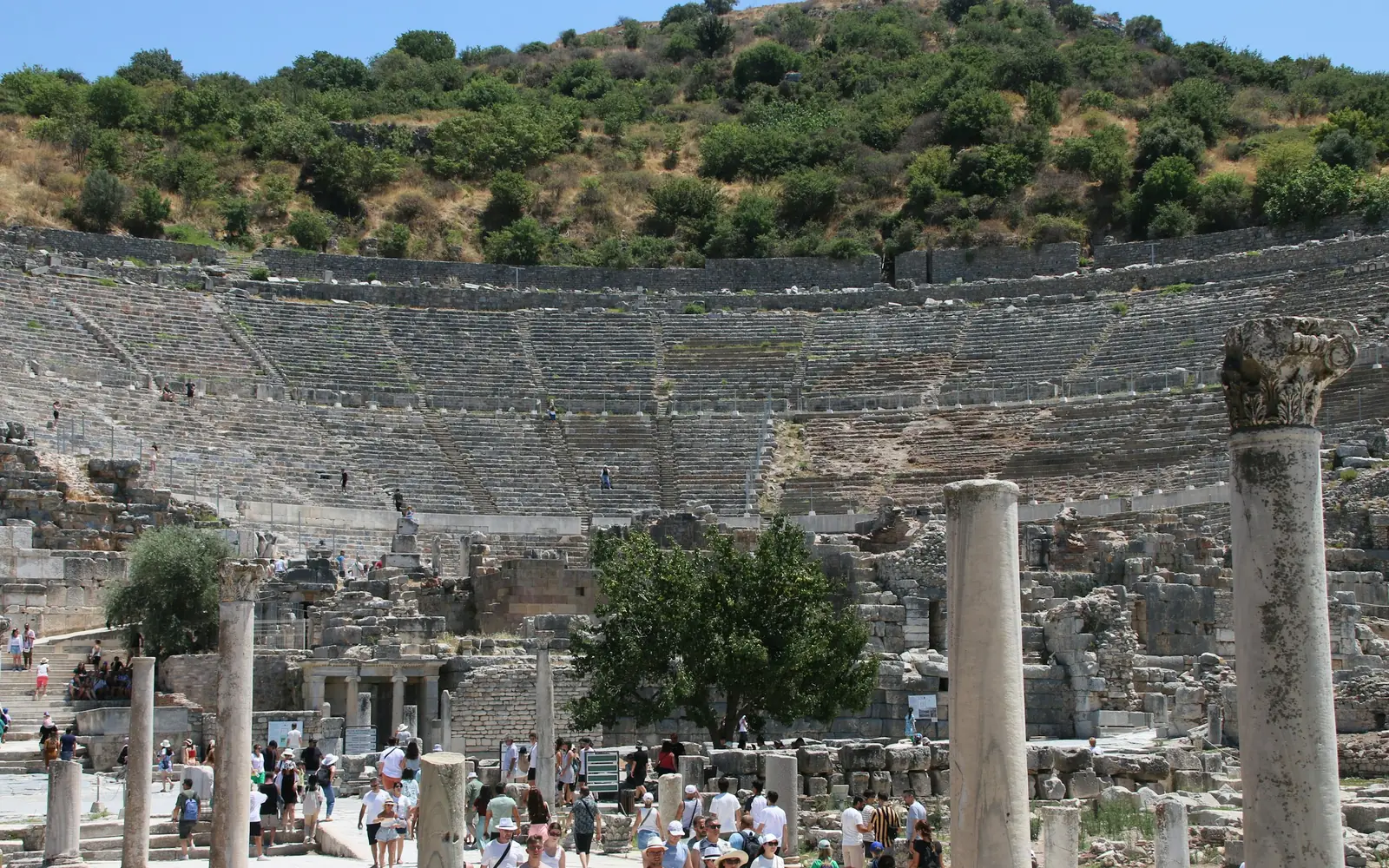
The stone tiers of the Great Theatre of Ephesus curving around the orchestra
The Great Theatre
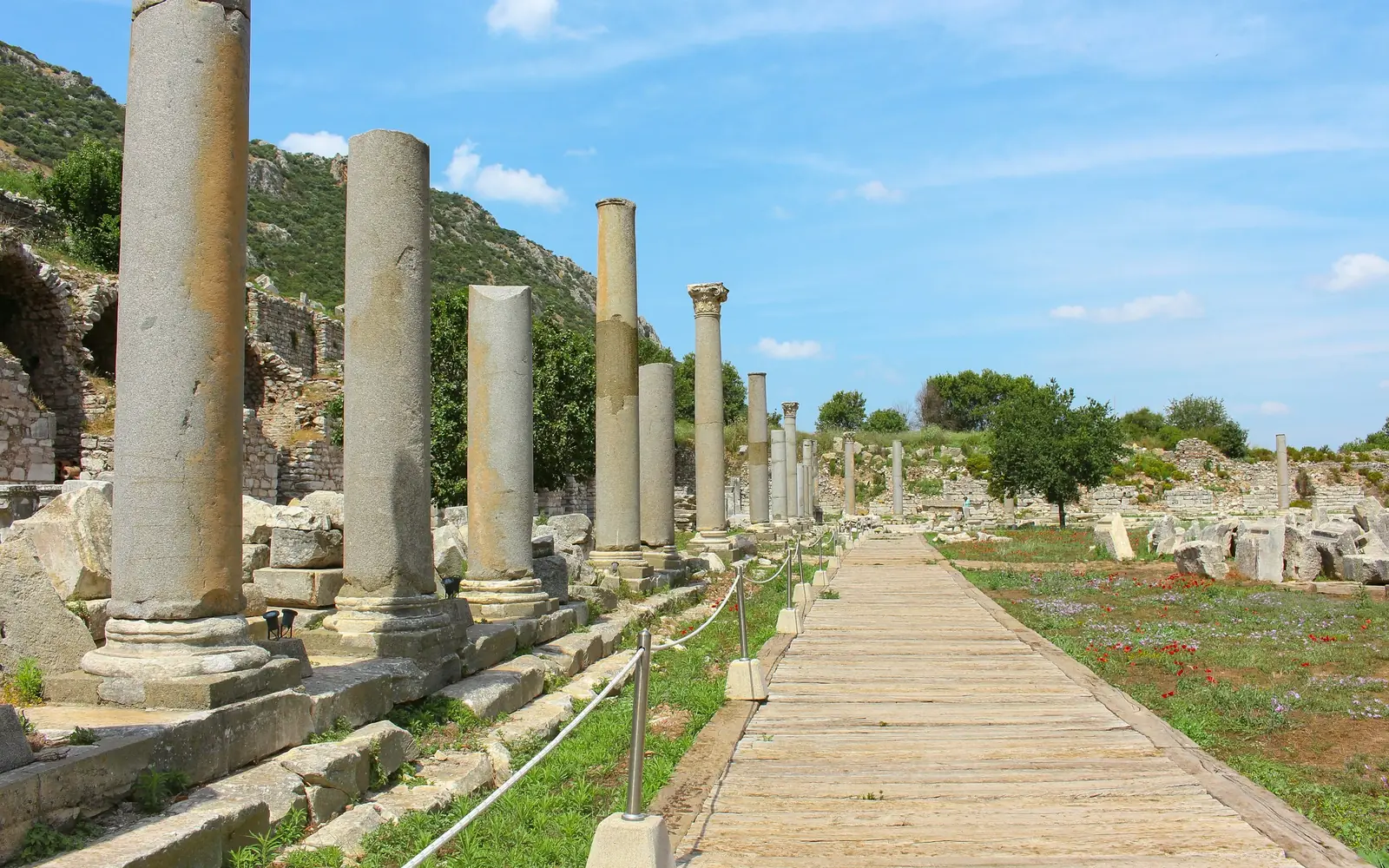
A colonnaded marble street at Ephesus with columns on either side
A colonnaded street
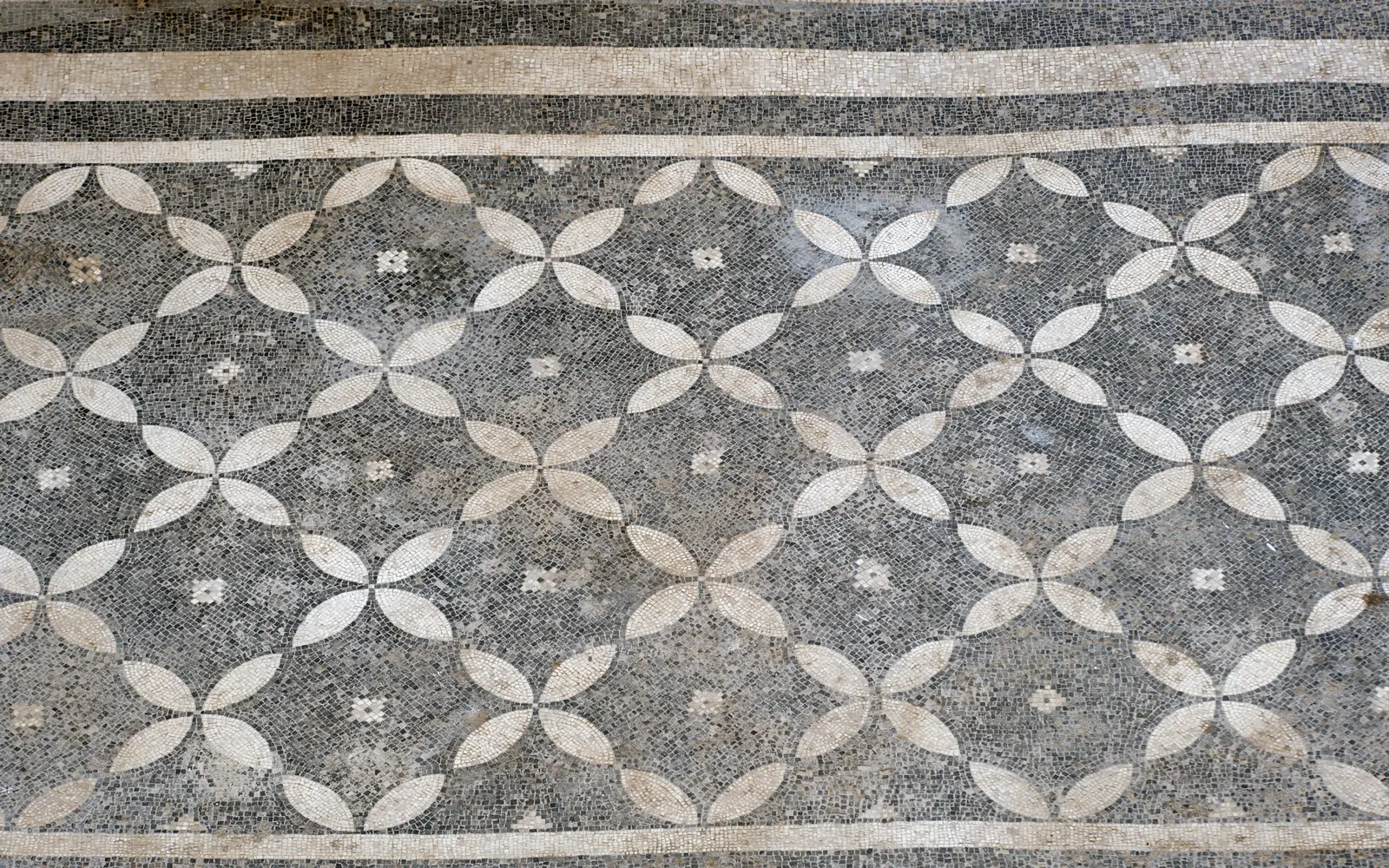
A geometric floor mosaic inside the Terrace Houses at Ephesus
Terrace Houses mosaic

Your five-minute guide

Your Ephesus 5-minute guide

Hand-written, narrated by a heritage host, sent to every customer the day before their visit. Five minutes that turns the marble streets into a real story — the great Roman provincial capital, the library raised as a monument and a tomb, and the theatre that held 25,000.

  • Why Ephesus became one of the greatest cities of the Roman world
  • The Library of Celsus — a monumental library built over a tomb
  • The Great Theatre and the assembly that filled its 25,000 seats
  • What to look for in the Terrace Houses — mosaics and frescoes in place
Included free with every ticket. No app, no download — plays in any browser.

The downhill route

From the Upper Gate to the Lower Gate

Everything we tell our own customers before they walk in, in the order the site unfolds.

  1. What is Ephesus?

    Ephesus is an ancient city on the Aegean coast of Türkiye, close to the modern town of Selçuk in İzmir province, and it ranks among the most complete classical cities to survive anywhere in the Mediterranean. Greek colonists founded it in the tenth century BC, and it grew into one of the great cities of the Ionian world before passing to Rome in 129 BC. Under Augustus it became the capital of the province of Asia, and the geographer Strabo judged it second in size and importance only to Rome itself. At its height in the first and second centuries AD it was a thriving provincial capital, a commercial hub and one of the largest cities of the Roman Empire, with tens of thousands of inhabitants.

    What sets Ephesus apart is that you walk through the plan of a living Roman city rather than a scatter of stones. Colonnaded marble avenues run between temples, fountains, baths, agoras and a vast hillside theatre, so the streets read clearly as the place where people once shopped, worshipped and governed. The city was also a major centre of early Christianity, closely tied to the apostle Paul, who lived and preached here in the 50s AD. That combination of exceptional preservation, sheer scale and religious significance is why UNESCO inscribed Ephesus on the World Heritage List in 2015. The old harbour has long since silted up, leaving the sea some three to four kilometres away, but the marble city it once served still stands among the hills, remarkably intact.

  2. What's on the site?

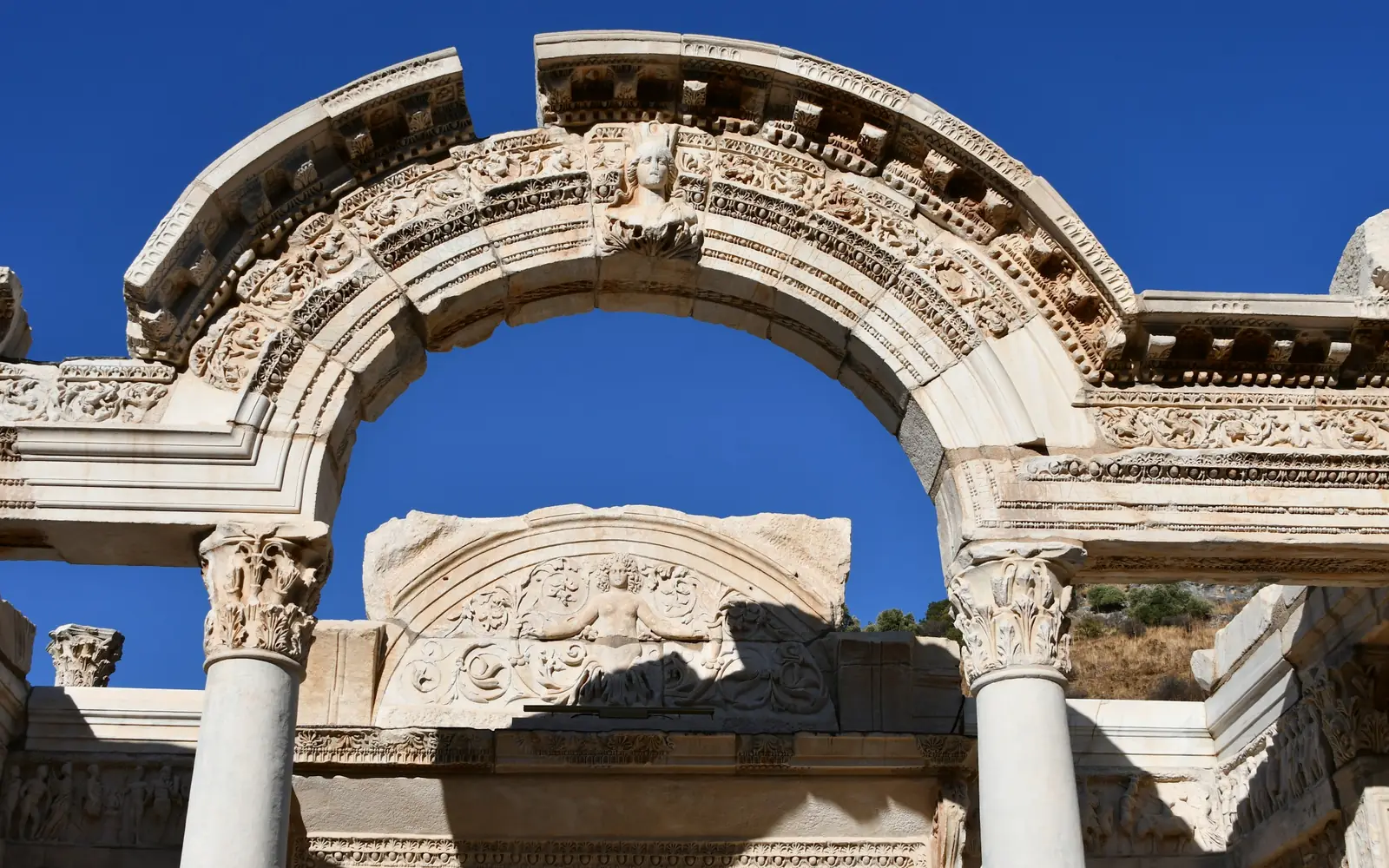
    The unmissable monument is the Library of Celsus, whose two-storey marble facade has been carefully rebuilt from its original fragments between 1970 and 1978. Raised around 125 AD as both a monumental library and the tomb of the Roman senator Tiberius Julius Celsus Polemaeanus, it once held nearly twelve thousand scrolls. Its columns, pediments and statue niches, with figures personifying wisdom, knowledge, intelligence and virtue, make it the most photographed sight in Ephesus and one of the icons of the ancient Aegean. Leading up to it, Curetes Street runs as a colonnaded marble avenue lined with the Temple of Hadrian, ornate public fountains, communal latrines, shop foundations and statue bases, giving a vivid picture of daily life in the Roman city.

    The largest structure is the Great Theatre, cut into the slope of Mount Pion with seating for around twenty-five thousand spectators and believed to be the largest theatre of the ancient world. Used for performances and civic assemblies, it is where the apostle Paul is said to have preached, and it commands a long view down the old Harbour Street toward the vanished port. Around the site you also find the state and commercial agoras, temples, bath complexes, the odeon and a wealth of carved detail. The visit now includes the Ephesus Experience Museum as well, a separate immersive multimedia show that reconstructs the city at its height using large-scale projection and sound, bringing the ruins to life as a crowded, working metropolis. Together these monuments turn a walk down the marble streets into a legible portrait of a great Roman capital.

  3. The Terrace Houses

    On the slope opposite the Temple of Hadrian, behind their own gate, lie the Terrace Houses, the homes of the wealthy citizens of Roman Ephesus and one of the most remarkable parts of the whole site. Built against the hillside on stepped terraces, these patrician residences preserve mosaics, marble wall cladding and painted frescoes in place, protected today beneath a large modern roof. Raised walkways carry you above the original Roman floors and let you look down into courtyards, colonnaded halls and frescoed reception rooms that survive in extraordinary condition. Where the public monuments outside show how the city governed and worshipped, the Terrace Houses show how its elite actually lived, room by decorated room.

    The Terrace Houses require a separate ticket on top of standard site admission, and they reward it. They are quieter than the main avenue, sheltered from the open Aegean sun beneath their protective roof, and rich in the kind of domestic detail you rarely encounter elsewhere in the ancient world, from geometric floor mosaics to delicate wall paintings and marble-lined bathrooms. The sensible plan is to build them into your visit and see them part-way through, both for the cool break from the heat and for the striking contrast with the grand civic architecture along Curetes Street. Allow an extra forty-five to sixty minutes to walk the terraces at an unhurried pace. For anyone drawn to how Romans lived rather than only how they built, this is the highlight of Ephesus, and it consistently rewards the additional admission.

  4. How does ticketing work?

    The standard site ticket covers the whole open archaeological city, from the marble streets and the Library of Celsus to the Great Theatre, Curetes Street, the Temple of Hadrian and the public monuments, together with the bundled Ephesus Experience Museum. It is open admission, valid during opening hours on the day of your visit, with no fixed entry time slot to reserve. That makes Ephesus one of the more relaxed major sites to plan around: you choose your own day, arrive whenever it suits you, and walk straight in. The e-ticket carries a QR code that is scanned from your phone at the gate, so there is nothing to print and nothing to collect on arrival.

    We are an independent concierge service that helps international visitors book Ephesus in their own language, not the site's official ticket office. Concierge-booked tickets carry the same open-date, skip-the-line entry as a direct purchase, with our service fee disclosed inline at checkout and no foreign-exchange markup added at your bank, so the price you see is the price you pay. We list two products: the adult site ticket, and a Terrace Houses add-on for the separately gated patrician homes. The add-on requires a valid site ticket and is used on the same visit, since it is not standalone admission. We issue your tickets promptly by email, and on the day you simply show them on your phone at either gate.

  5. When is the best time to visit?

    Arrive at opening or in the late afternoon, and aim for spring or autumn if your dates allow. Ephesus sits in the open with almost no shade, so the midday heat from late spring through early autumn is genuinely demanding, with summer afternoons regularly climbing above thirty-five degrees Celsius as the pale marble reflects the sun. The early morning and the final hours before closing are far cooler and far quieter. The site is busiest in the middle of the day, roughly between 10:00 and 14:00, when cruise-ship excursions from the port of Kuşadası and tour coaches converge together. A morning or late arrival buys you the marble streets in relative calm and softer light on the Library of Celsus facade.

    Because the standard ticket is open-dated, you can simply pick a cooler, quieter day and turn up when it suits. By season, April and May and then September and October offer the best balance of warm but bearable weather, long daylight and thinner crowds. Midsummer is hot and busy, and the heat on the unshaded marble can be intense, so if you visit in July or August, go early, carry plenty of water, and use the roofed Terrace Houses as a cool midway break. Winter is mild on the Aegean and the quietest time of year, with shorter days and the occasional shower, yet the site stays open daily and the low light falls beautifully across the ruins. Whatever the season, the opening hour consistently delivers the coolest temperatures and the emptiest streets.

  6. How do you get to Ephesus?

    Ephesus lies about three kilometres from Selçuk, the nearest town, which has a railway station on the line from İzmir. From Selçuk the site is a five-minute taxi ride or a short, hot walk to the gates. Many visitors come instead from the Aegean resort and cruise port of Kuşadası, around eighteen kilometres away and twenty-five to thirty minutes by car or by shared minibus, the Turkish dolmuş, often on a cruise excursion or organised day tour. From İzmir, roughly seventy-five kilometres to the north, it is about an hour by car, or a train to Selçuk followed by a short taxi to the entrance. İzmir's Adnan Menderes Airport is the usual arrival point for international visitors flying in.

    The site has two entrances, an Upper Gate and a Lower Gate, set at either end of the main street. The easier plan is to enter at the Upper Gate and walk gently downhill through the city to leave at the Lower Gate, a real advantage in the Aegean heat because it spares you climbing the long marble avenue. Taxis, dolmuş minibuses and tour transfers serve both gates. If you arrive independently rather than on a tour, agree your return pickup before you set off, since the site sits a short distance outside town and taxis are not always waiting at the exit. Coming early also means you finish the downhill route before the midday heat and the coach parties arrive together, roughly between mid-morning and early afternoon. For a car-free day, the train to Selçuk followed by a short taxi is the simplest independent route to the gate.

  7. Is the site accessible for visitors with mobility needs?

    Ephesus is an open archaeological site spread across a hillside, and that sets real limits on accessibility. The main marble street is broadly walkable, and the downhill route from the Upper Gate is manageable for many visitors, but the surfaces are ancient and uneven, with worn paving, gentle slopes and occasional steps. The going is therefore harder for wheelchair users and for anyone with significantly reduced mobility. The Terrace Houses are reached by stairs and raised walkways and are not step-free, while the Great Theatre involves a climb if you want to go up into the seating rather than view it from below. Firm, comfortable footwear is essential for everyone because of the uneven marble underfoot.

    If mobility is a concern, contact us before booking and we will confirm the current arrangements with the site, including which sections are realistically reachable and which gate best suits your needs. Entering at the Upper Gate and moving downhill avoids the hardest climbs and is the route we suggest for anyone who tires easily. Because the site is almost entirely unshaded and the paving demands attention, sun protection, water and a slow pace matter as much as the terrain itself, especially in the summer months. The roofed Terrace Houses, where they are reachable, provide a cooler and more sheltered stretch midway through the visit. Planning the order of the monuments in advance, and allowing extra time, makes the day far more comfortable for visitors who need to pace themselves across the open ruins.

  8. What else is nearby?

    Ephesus sits at the heart of one of the richest clusters of sights on the Aegean coast, so it pairs naturally with a full day in the region. In Selçuk itself stand the remains of the Temple of Artemis, one of the Seven Wonders of the Ancient World, completed around 550 BC and now represented by a single re-erected column in a marshy field. Close by are the sixth-century Basilica of St John, built under the emperor Justinian over the traditional burial place of the apostle, and the Ephesus Archaeological Museum, which displays many of the finest movable finds recovered from the site.

    The hill village of Şirince, known for its old houses and local fruit wines, is a short drive inland and makes a relaxed lunch stop. Above the plain, the House of the Virgin Mary, a pilgrimage chapel on Bülbül Mountain about seven kilometres from Selçuk, draws many visitors and pairs easily with the main site. The beaches, marina and bazaar of Kuşadası are close at hand for anyone combining ancient history with time on the coast. Because Ephesus is at its coolest and quietest first thing, a common plan is to spend the morning walking the ruins, then add the museum, the Temple of Artemis, the Basilica of St John or Şirince in the afternoon. Together these make Selçuk an easy base for a day or two rather than a single stop, with classical, Christian and everyday Aegean life all within a few kilometres of the ancient city.

The carved arch of the Temple of Hadrian on Curetes Street
Temple of Hadrian
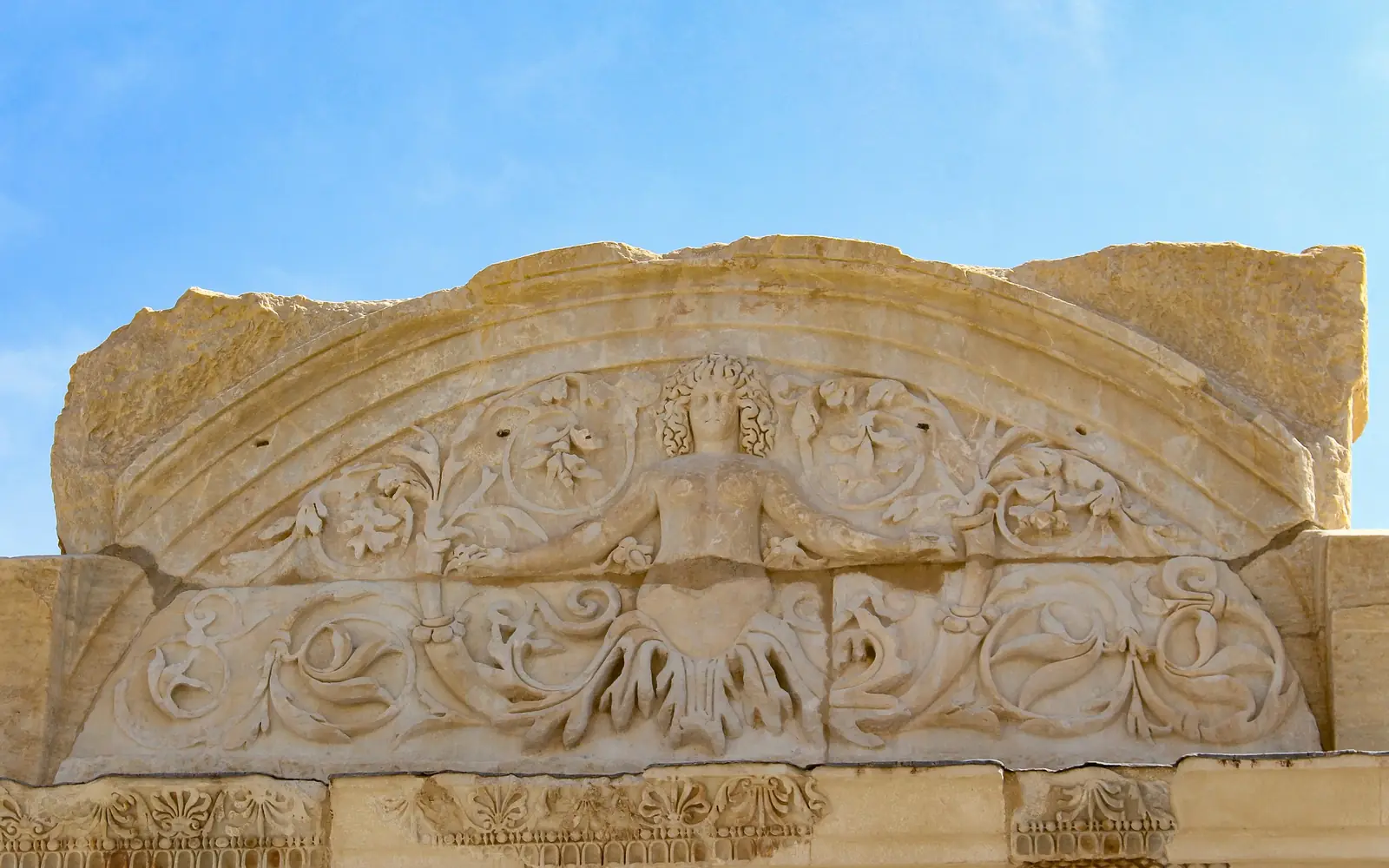
A carved marble relief from the Temple of Hadrian at Ephesus
Relief on the Temple of Hadrian
Visitors walking down Curetes Street towards the Library of Celsus at midday
Midday on Curetes Street
Close-up of carved marble ornament on a monument at Ephesus
Marble ornament

Practical ledger

Hours, distances and the two gates

Three bays: planning the day, getting to the gate, and moving around inside.

Plan the day

Opening hours
Open daily. Hours vary by season: roughly 08:00–19:00 in summer (last admission about 18:00) and 08:00–18:00 in winter (last admission about 17:30). The Terrace Houses and the Ephesus Experience Museum keep similar hours; allow time to see everything before last admission.
Time needed
Allow about 2 to 3 hours for the main site — the Library, the theatre, Curetes Street and the monuments. Add 45–60 minutes for the Terrace Houses and time for the Ephesus Experience Museum.
What to bring
There is almost no shade on the open site. Bring water, a hat, sunscreen and comfortable shoes for the marble paving, especially from late spring to early autumn when the midday heat is intense.
Photography
Permitted throughout for personal use. The classic shot is the Library of Celsus facade; the Great Theatre and the colonnaded Curetes Street are the other favourites.

Get to the gate

Address
Ephesus Archaeological Site, Selçuk, İzmir Province, Türkiye
Getting there from Selçuk
≈3 km from Selçuk town centre — about 5 minutes by taxi or a short, hot walk in summer. Selçuk has the nearest railway station, on the line from İzmir.
Getting there from Kuşadası
≈18 km, about 25–30 minutes by car or minibus (dolmuş). Kuşadası is the cruise port many visitors arrive through.
Getting there from İzmir
≈75 km south, about 1 hour by car, or a train from İzmir to Selçuk plus a short taxi to the gate.

Inside the site

Two gates
The site has a Lower Gate and an Upper Gate. Entering at the Upper Gate and walking downhill to the Lower Gate is the easier route, as the main street runs gently downhill — useful in the Aegean heat.
Accessibility
The main marble street is broadly walkable but uneven, with ancient paving, slopes and some steps; the Terrace Houses are reached by stairs and raised walkways. Parts of the site are difficult for wheelchair users and those with limited mobility — contact us before booking if mobility is a concern.

Read before booking

What this service is, and is not

Ephesus Tickets acts as a facilitator to help international visitors purchase skip-the-line tickets for the Ephesus Archaeological Site, which is owned and managed by a Turkish public heritage authority. We do not resell tickets — we provide a personalised booking and support service in your own language.

You pay once, in your currency. We then buy your official open-date ticket, email it to you as a QR code, and stay reachable in your language until you are through the gate.

Sources: muze.gov.tr, en.wikipedia.org Page reviewed:

Question portico

Ask one thing at a time

Pick a question on the left; the answer opens on the right.

What's included in the skip-the-line ticket?

Priority entry past the ticket-office queue and access to the whole archaeological site — the Library of Celsus, the Great Theatre, Curetes Street, the Temple of Hadrian and the public monuments — plus the bundled Ephesus Experience Museum. The ticket is open-dated, so you choose your own day.